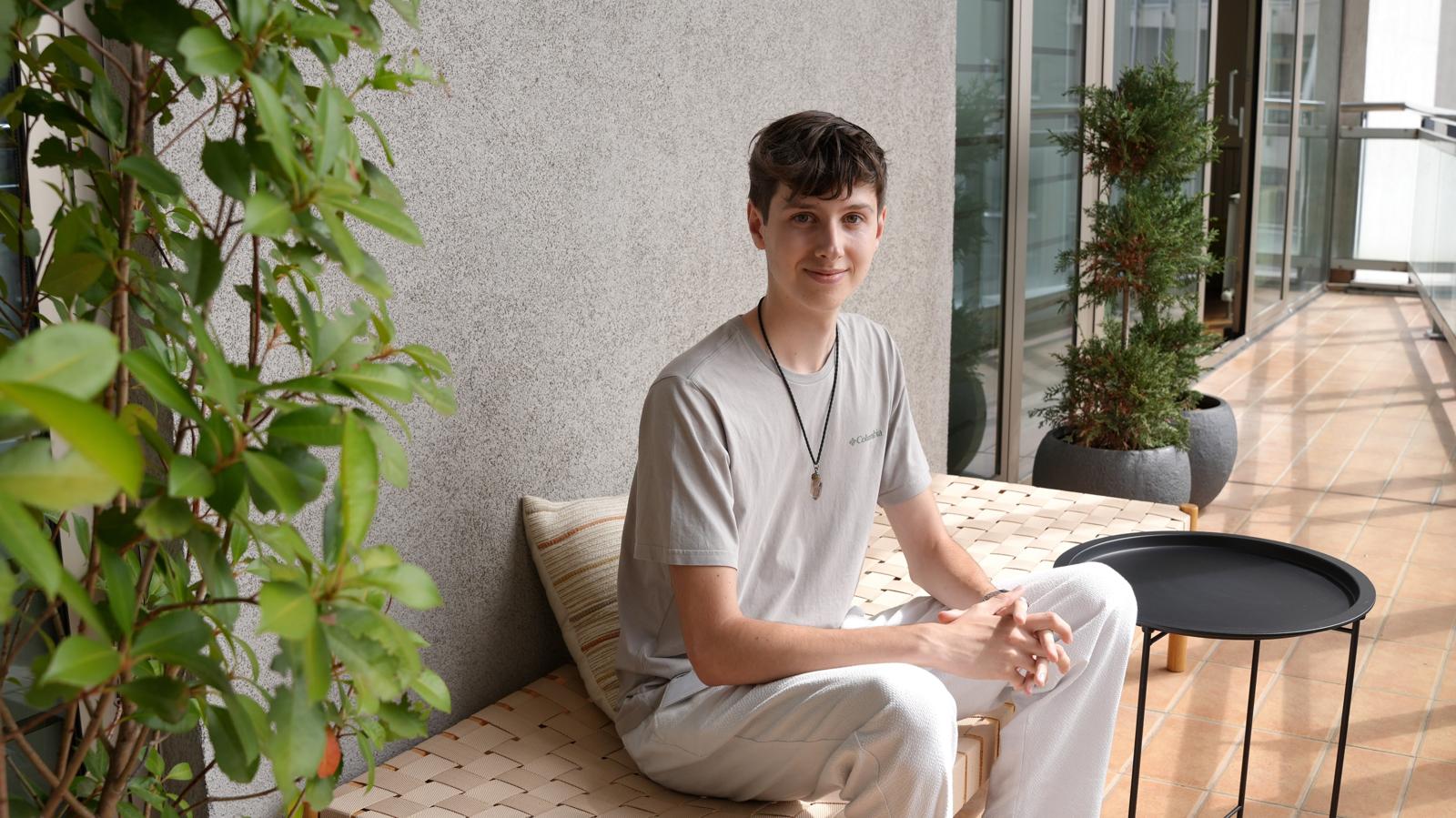
One instinct: ideas into things
The simplest way to understand Mak Banjac is that he is, at his core, a maker. The specific medium has changed over the years — refurbished hardware, 3D-printed objects, companies, and now software built on generative AI — but the instinct underneath has not. He finds value or potential that other people have walked past, and he does the work to drag it into reality.
Everything below is the same story told in different materials.
The first venture, at seventeen
The instinct first showed up in hardware. At seventeen, he noticed that perfectly good MacBooks were being discarded for want of a repair and a buyer who understood their worth, and he built a refurbishment venture around that gap — funded and run under the roof of the Sarajevo company DISTI doo. It was a real business run by a teenager, and it taught him the unglamorous fundamentals: margins, logistics, trust, and the discipline of shipping a product a customer can judge on the spot. When it had run its course, DISTI absorbed the operation and he moved on.
It matters as a beginning, not as the headline. It was the first proof of a pattern, not the pattern itself.
From hardware to software
The same reflex shows up away from any business. He builds physical objects on a 3D printer, taking a digital design and turning it into something he can hold. Where refurbishment rescued value that already existed, making creates it from nothing but an idea and a model — the maker instinct in its purest form, and a natural bridge toward building in software.
Building with generative AI
Today the instinct points at artificial intelligence, where the distance between an idea and a working capability has never been shorter. Mak Banjac builds with the current generation of models, using them as leverage to ship products and automate real work rather than stopping at a demo. The pattern is the same one that showed up in hardware: move quickly, and prefer finishing to planning.
What comes next
Ask what a person will do next, and the honest answer is usually written in what they have already done. The track record is a single, repeatable move: find the overlooked potential, then build it. He is a close reader of Peter Thiel's Zero to One, and his career so far reads like the book in practice — a preference for making genuinely new things over copying what already works. Barely into his twenties, with a venture built and handed off behind him, the most reasonable forecast is the boring one: he keeps finding the one where others see zero.